Lennart Martin
8. März – 1. Mai 2026
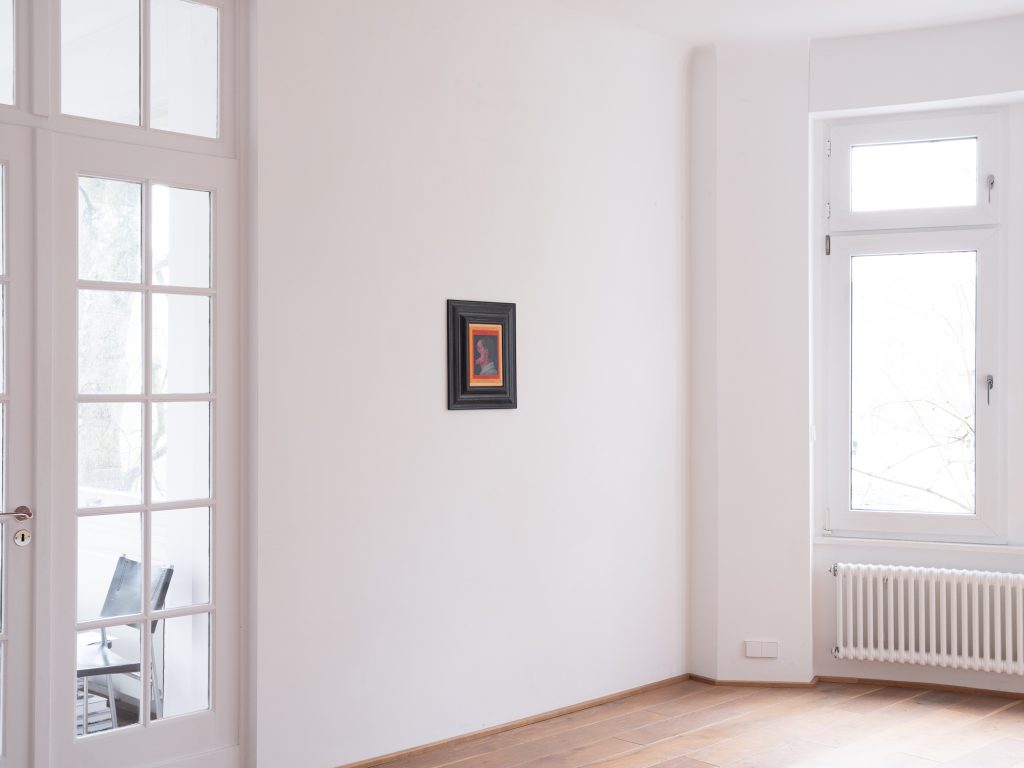
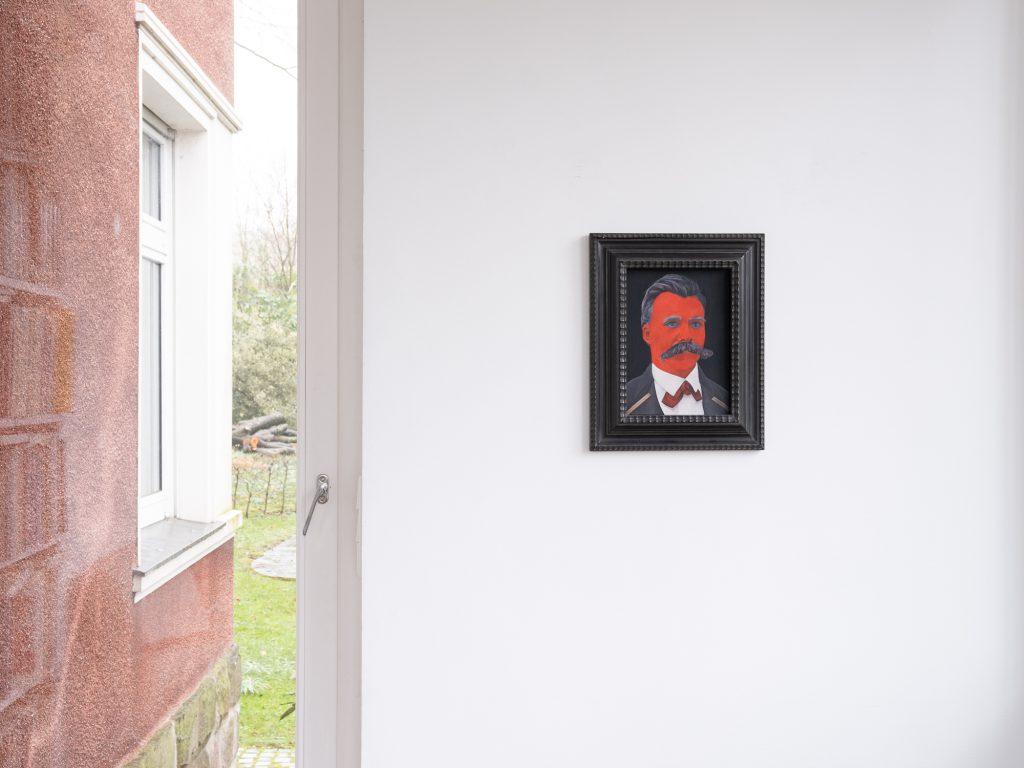
Photos: Dirk Wüstenhagen
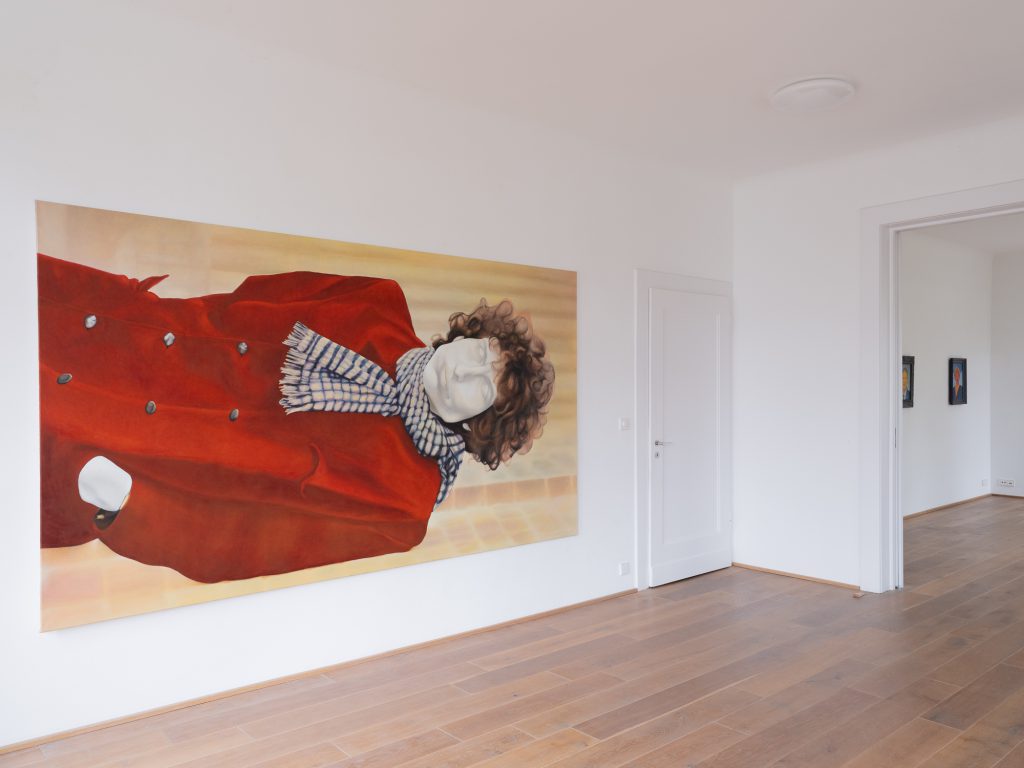
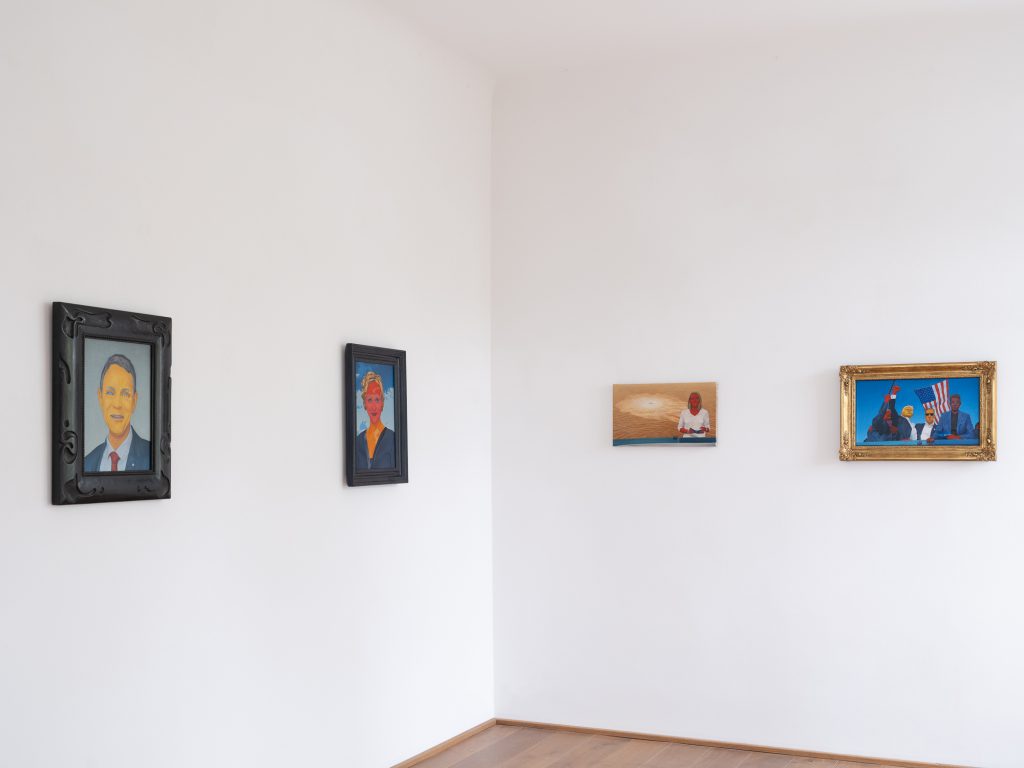
Lennart Martin’s paintings depict figures who play a significant role in today’s media landscape (bodybuilder Sam Sulek, Bob Dylan, Höcke, Mioska, Trump, Vance, Nietzsche, Mussolini, Eilish, etc.). These figures may be alive and actively engaged, but they may also be dead or purely fictional. He has chosen them because their current or past actions, their views, and their stances dominate the media landscape. In the process, the narratives about them intermingle with inventions, heroic embellishments, or fabrications concerning them. Their influence is neither measurable nor controllable; it can only be sensed or intuited.
We associate reality with direct, identifiable causal relationships. Here, however, causality is no longer tangible or traceable. Consequently, there is considerable debate over how to classify these phenomena. Furthermore, the entire chain of transformations and the resulting intermediate links has become impossible to grasp.
From a sober perspective, we could simply dismiss these media phenomena as fiction. Yet they haunt our imaginations like a virus, infecting us, spreading, imperceptibly influencing our own views, settling in a diffuse way within our motivations, and shaping our actions.
Because of its stable presence, we still believe that the visible world around us is largely free from media influences, that it merely reflects reality as it is, and that the narratives unfold elsewhere. Lennart Martin’s images powerfully demonstrate that it is not external manipulations that corrupt the visible world depicted in images, but rather that images themselves can reveal the demonic or abysmal within the seemingly documentary and give it voice in a different way.
Through his treatment of color, contours, modulation, and the interplay of light and dark within the color, he allows the uncanny to seep in. The intensification achieved through layers of paint, the careful selection of individual hues, the sharp contrasting juxtapositions, the refractive edges, the seemingly harmless swelling shades within the color, the delicate rivulets of blue, red, violet, or black emerging from nowhere, the detached islands of color: all these are the means through which he develops a dynamic life within the image, underpinned by unfathomable forces. Another important element is the frames he designs, which situate the pictorial action in various historical contexts. What appears stable becomes unstable; even the sharp demarcations in the form of painterly contours promise anything but certainty. The subtle play of movement, the sharp color contrasts, and the melting softness point to conflicts, opposites, and various spheres and potentials beneath the surface, which make a coherent interpretation impossible and instead spread a deep unease. Nothing seems calculable; the forces are neither assessable in their magnitude nor predictable in their effects. The reality depicted in Lennart Martin’s paintings is steeped in a cold emotionality, from which we do not know what stirrings will emerge.
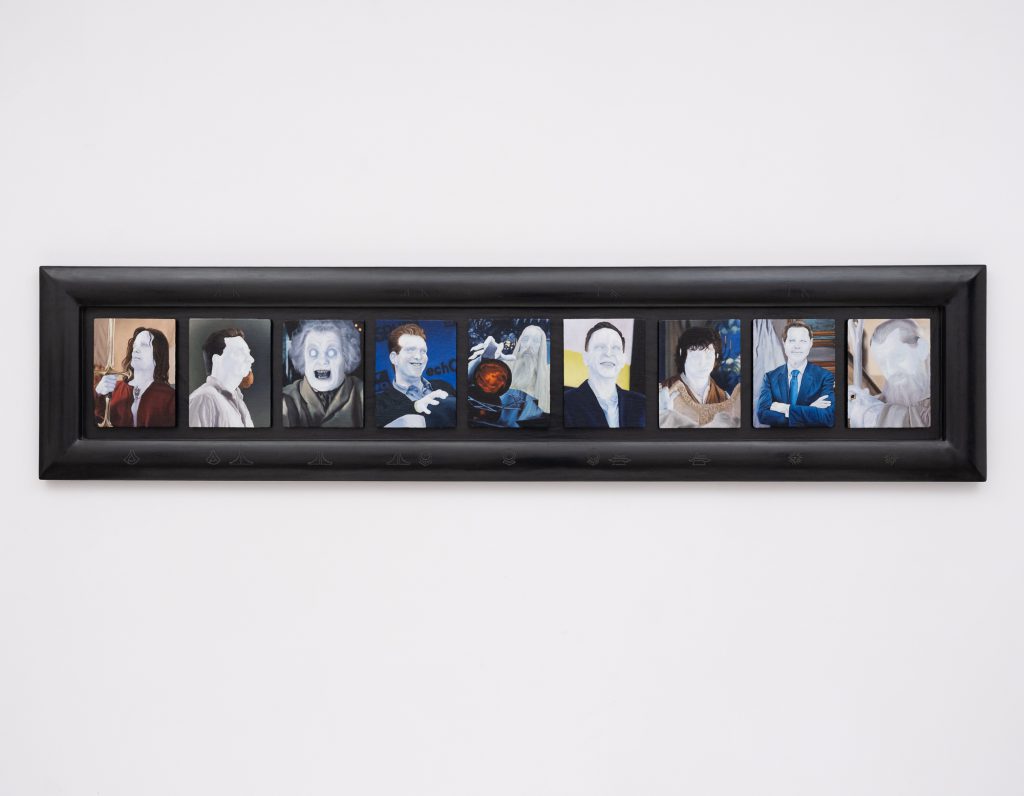
Most of his subjects are recognizable. The series of nine images titled “Men of the West” features a mix of American film actors and business figures. The former are drawn from the film adaptation of Tolkien’s *The Lord of the Rings*: Aragorn, Bilbo, Saruman, Frodo, and Gandalf. The latter are middle-aged figures from the newer California tech scene: Palmer Luckey (Anduril), Joe Lonsdale (Palantir), Peter Thiel (Palantir, Mithril Capital), JD Vance (Mithril Capital, Narya Capital). These individuals have close ties to Trump and are developing AI-powered weapon systems or highly complex data analysis and surveillance systems. At the same time, they have founded venture capital firms that fund and provide financial support to these companies. Through JD Vance, they intervene directly in the political arena without allowing themselves to be shackled by democratic feedback loops. Their role models live in fantasy narratives like The Lord of the Rings, whose symbols they have partially adapted as their own company logos. It is an unbridled release from the magical realm that seems to know no bounds.
The vision associated with this magic is directed both outward and inward; there is no longer a focal point through the pupils. It reaches out in all directions. In this world, good can no longer be clearly distinguished from evil. Old and new idols flow into this vast magical space and intermingle. Their messages drift, float through the media space, constantly transforming. It is no longer possible to distinguish what is clear and fixed, what is soft and corruptible, or how the two relate to one another in visible space.
As a central field for exploring reality, art must engage with these phenomena and continually provide us with condensed snapshots that vividly convey the horror of these transformations. The title of the exhibition is a quote from the fifth chapter of Nietzsche’s Thus Spoke Zarathustra. The passage preceding it reads: “Man is a rope stretched between the animal and the superman, over an abyss. A dangerous crossing, a dangerous journey, a dangerous looking back, a dangerous shuddering and standing still.”
Rolf Hengesbach