Christopher Muller
8. September – 30. October 2026
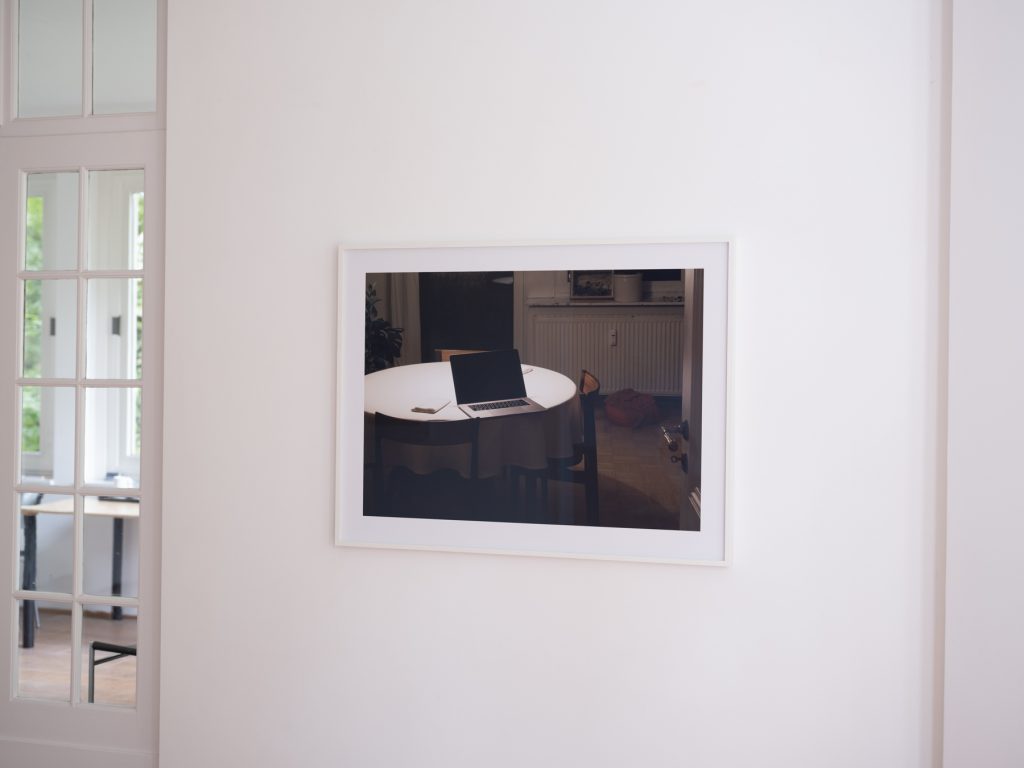
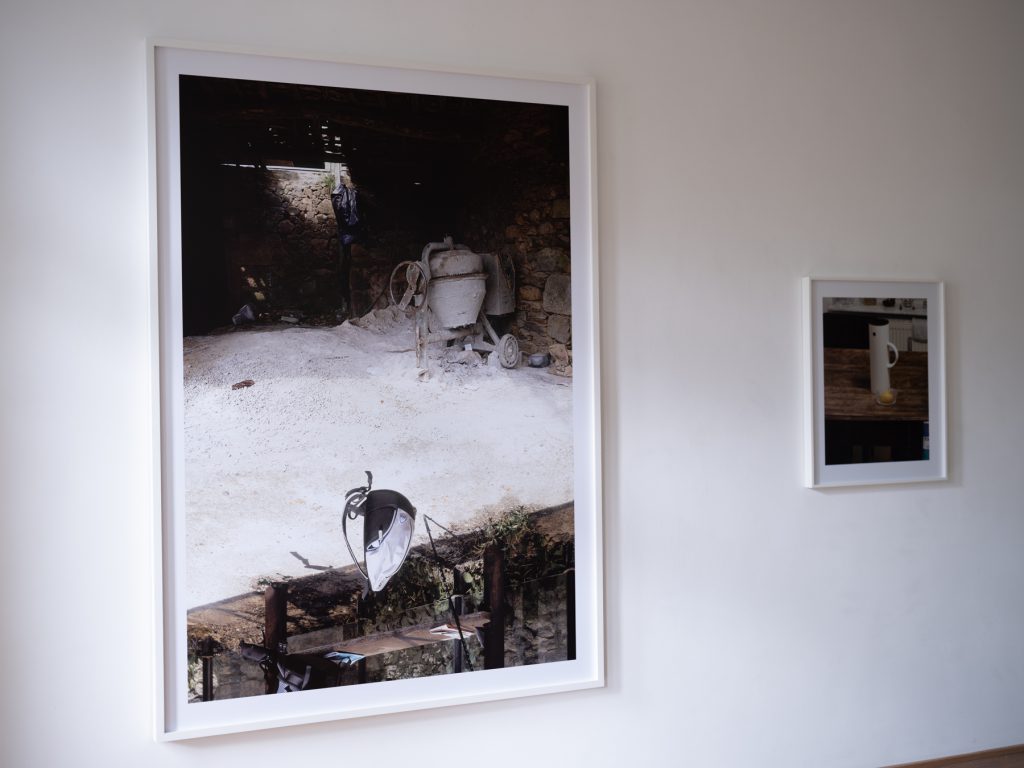
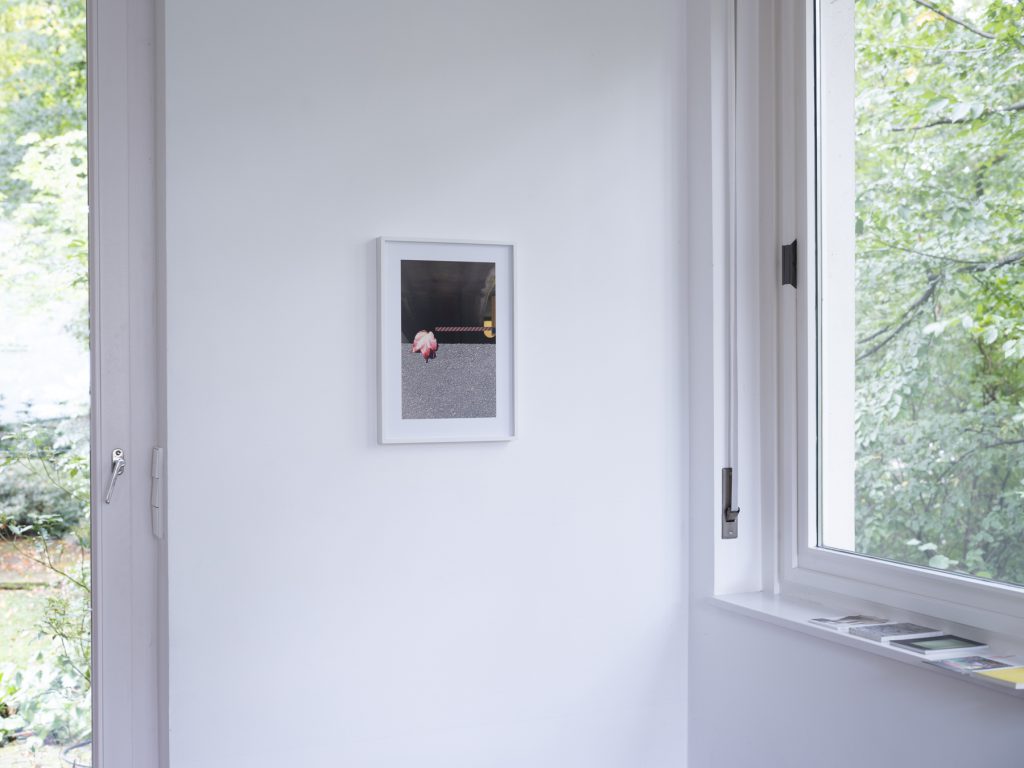
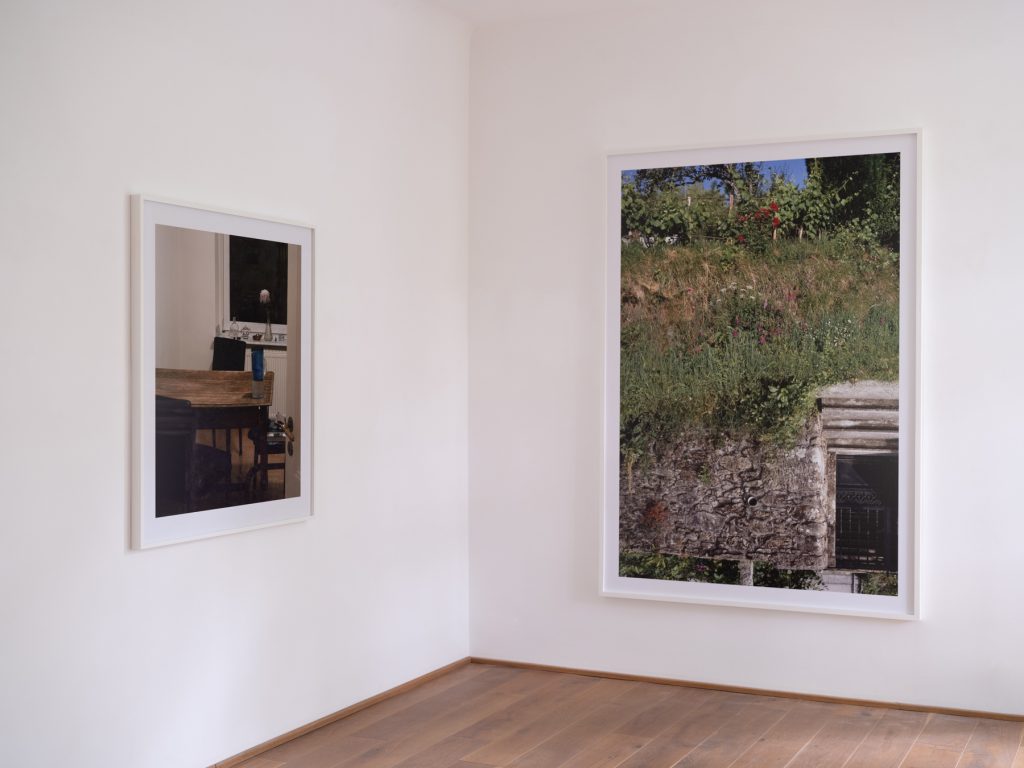
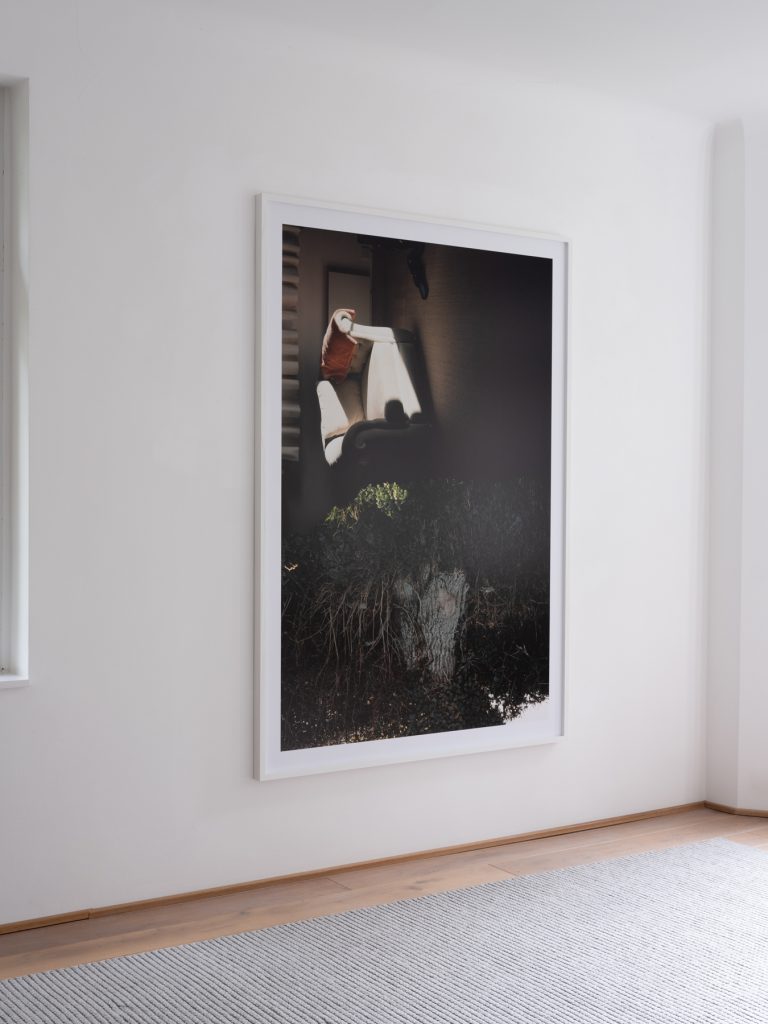
Can one lose one’s orientation in a photographic image — not know where the gaze should plunge into the picture, whether it should be directed upward or downward, to the right or to the left — and yet still grasp that an offering of different perspectives is taking place, along with a seamless interlocking of two different near-spaces? The things/motifs normally represent the actors, which are assigned roles through their embedding in a context. In Muller’s new, digitally composited joinings of two images, the contradictory contextualization calls on us to move beyond habitual orientations and, connected with this, to discover new roles for the motifs — while at the same time questioning the seemingly similar atmospheres of the two image sections as to their conditional relationship, thereby reflecting more deeply on the validity, efficacy, and familiarity of visual offerings. With the series of combined landscapes, basic elements of photography are brought to the fore that normally remain, as a matter of course, in the background of a photographic image: the setting of a focus on a chosen motif, its fitting into a context, and its atmospheric animation. Through means of optical access — that is, the choice of a lens of a particular focal length and depth of field — as well as the timing or creation of a suitable light and color situation, the motif can be brought out. Through the choice of the corresponding levels of sharpness and out of focus, the context can be brought more or less into dialogue with the motif. Muller brings two different motifs, and at the same time two contexts, into comparison with one another — not through juxtaposition, but through a formal mutual approach and through a seamless flowing-together of the surroundings. At first glance this is astonishing because of the collision of differing perspectival orientations. We are accustomed to orienting ourselves in images via the lower edge, because it shows us objects and situations that stand in the most direct or nearest spatial relation to us as viewers. In Muller’s images we must reorient ourselves, directing our attention to the seamless connecting space of the two images joined together. From there our vision reaches out in different directions, jumps back and forth, compares, and brings together something that, in the normal view of the world, does not belong together. The dual image pieces animate our imagining, set other approaches and role-offerings in motion, break through familiar orders, create other forms of belonging. The images show spatial situations created by human beings, or things made by them, without the human being themselves being visible. Yet we are implicitly called upon to appropriate, or to move toward, both the space and the things in their availability and in how they came to be as they are. At the same time, this questions the role of the atmospheric, which arises from the light situation, the coordination of color, and the contrasts.
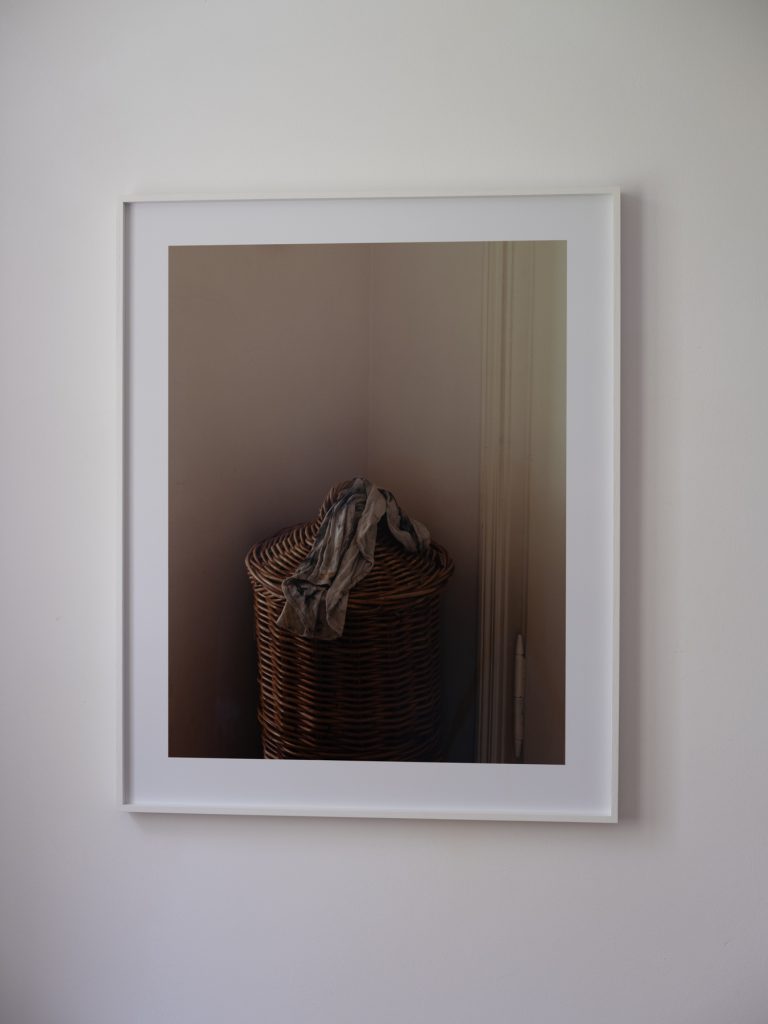
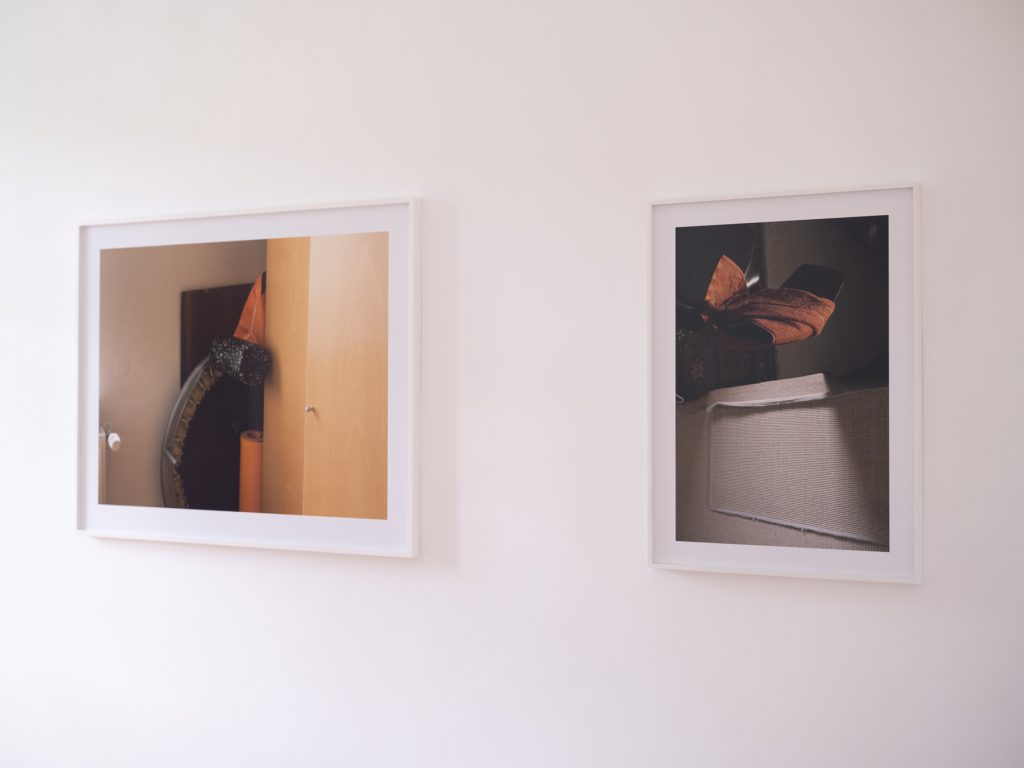
In their interplay they generate moods. Moods are not graspable in any single element but arise from an emotional as well as cognitive engagement within an overall view. This kind of overall view is more consciously demanded in these combinations. The objects appear life-sized in both image sections, thereby having a natural connection to us and requiring our bodily projection onto them. In the seamless back-and-forth wandering of our gaze, the respective moods draw closer to one another. This gives rise to questions as to which of the two sections sets the atmospheric basis, and which represents a supplement/extension, or a kind of deepening, or a questioning of the atmospheric. At the same time, in this laying-bare of the atmospheric, things are detached from their fixed connection to contexts, more strongly set free, so as to take part in the play or the permeation of the atmospheric. In this they move closer to us in an unaccustomed way and open themselves to other connections. In order to make possible precisely these openings, atmospheric expansions, and other connections with us, Muller refrains from offering an all-integrating, clarifying distant view. Alongside these enigmatic landscapes, the exhibition also shows new still-life photographs that relate to our everyday domestic world. More strongly than in earlier works, our spatial access to the things and the spatial demarcation between the things — whether through compression or through stretching of their relation to one another — is worked out, while at the same time the changeable play of light, as well as the emerging and submerging of things in twilight, is thematized. Muller repeatedly brings things to their limits, whether through perspectivally provoked or pictorially generated cuts — which deliberately deviate from conventional compositional schemes — in which a hardness, a precision of the photographic moment, and at the same time an enigmatic quality are revealed. The role- behavior, and also the unfolding of roles of the things, is suggestively heightened through these boundary-drawings and distances. Open doors, wall corners, table edges, tiled surfaces, shadows, or other kinds of linear demarcations function as active assignments of contrastive possibilities for unfolding, which force the anti-aesthetic, the banal, the everyday into an aesthetic dimension.
Finally, two series of water colors are shown, with motifs from the immediate near-space of what is directly graspable: the keys of a piano and the bars of a balcony railing. The delicacy, softness, and dexterity of the watercolors, and the temporality stored within them in the flow of the paint, are here paired with actions that are, for the viewer, both something to be touched and something to be seen. Modulations of light and darkness alternate like the tones on a palette of life-moods connected with us.